



Curator
Qaisra M. Khan is curator of Islamic art at the Khalili Collections, where her focus is on the Arts of Pilgrimage, a subject on which she has lectured and broadcast widely. She has a degree in Law and an MPhil in Oriental Studies both from the University of Cambridge and after working for many years in financial consulting, she acquired an MA in Islamic Art from SOAS, University of London.
She has worked for the Museum of Islamic Art in Qatar and the British Museum, London, where she co-curated the pioneering ’Hajj: Journey to the Heart of Islam’ exhibition. Her publications include Hajj and the Arts of Pilgrimage (2022) and Essays in Honour of Nasser David Khalili (2023).
Her interest in William Morris came about in 2017 when invited to the Cheltenham Literature Festival to explore the idea of William Morris and Islamic art. She is co-curator of the exhibition ’William Morris and Art from the Islamic World’ at the William Morris Gallery (2024).
Curator
Dror Elkvity is Curator of the Khalili Collection of Spanish Damascene Metalwork, as well as five other collections under the Khalili auspices: the Japanese Art collection, the Kimono collection, Enamels of the World, Aramaic Documents, and Swedish Textiles. His work encompasses all aspects of the collections, from research and conservation to publications and exhibitions. He has overseen numerous exhibitions and publications drawn from the collections, including Metal Magic: Spanish Treasures from the Khalili Collection, Auberge de Provence, Valletta, Malta (2012); Beyond Imagination: Treasures of Imperial Japan from the Khalili Collection, 19th to Early 20th Century, Moscow Kremlin Museums, Russia (2017); Splendours of Imperial Japan, Musée national des arts asiatiques – Guimet, Paris, France (2019); and Kimono: Kyoto to Catwalk, Victoria and Albert Museum, London (2020–2025). Publications he has worked on include the exhibition catalogues Kimono: The Art and Evolution of Japanese Fashion, ed. Anna Jackson (Thames & Hudson, 2015), and Kimono: Images of Culture, 1915–1950 in the Khalili Collections, ed. Jacqueline M. Atkins (Prestel, 2024). Forthcoming publications include Visions in Silk: The Khalili Collection of Japanese Fine Art Textiles, ed. Clare Pollard, and Japonisme: Artistry and Influence, ed. Dror Elkvity (working title).
Contributor
I’m Dr. Glaire Anderson, award-winning author and historian of Islamic art, architecture, and visual culture.
I’m Founding Director and Principal Consultant of the Digital Lab for Islamic Visual Culture & Collections (DLIVCC), a purpose-led business serving the games and GLAM (Galleries, Libraries, Archives, Museums) sectors. I’m also Senior Lecturer in Islamic Art and Deputy Director of the History & Games Lab at the University of Edinburgh in Scotland, where I’ve taught since 2018.
I mentor and advise a small number of private clients, with a focus on leadership and consulting across video games, XR+, education, and cultural heritage for positive social impact.
Collection in Focus – Islamic Art and Gaming
For our first insight of 2026, we focus on how our Islamic Art collection has found an exciting new home in Assassin’s Creed: Mirage. With guidance from Dr. Glaire Anderson, works from the collection helped shape the game’s rich historical setting and cultural detail. It’s a great example of how art and scholarship can travel beyond museums, reaching new audiences and bringing history to life through interactive digital experiences.
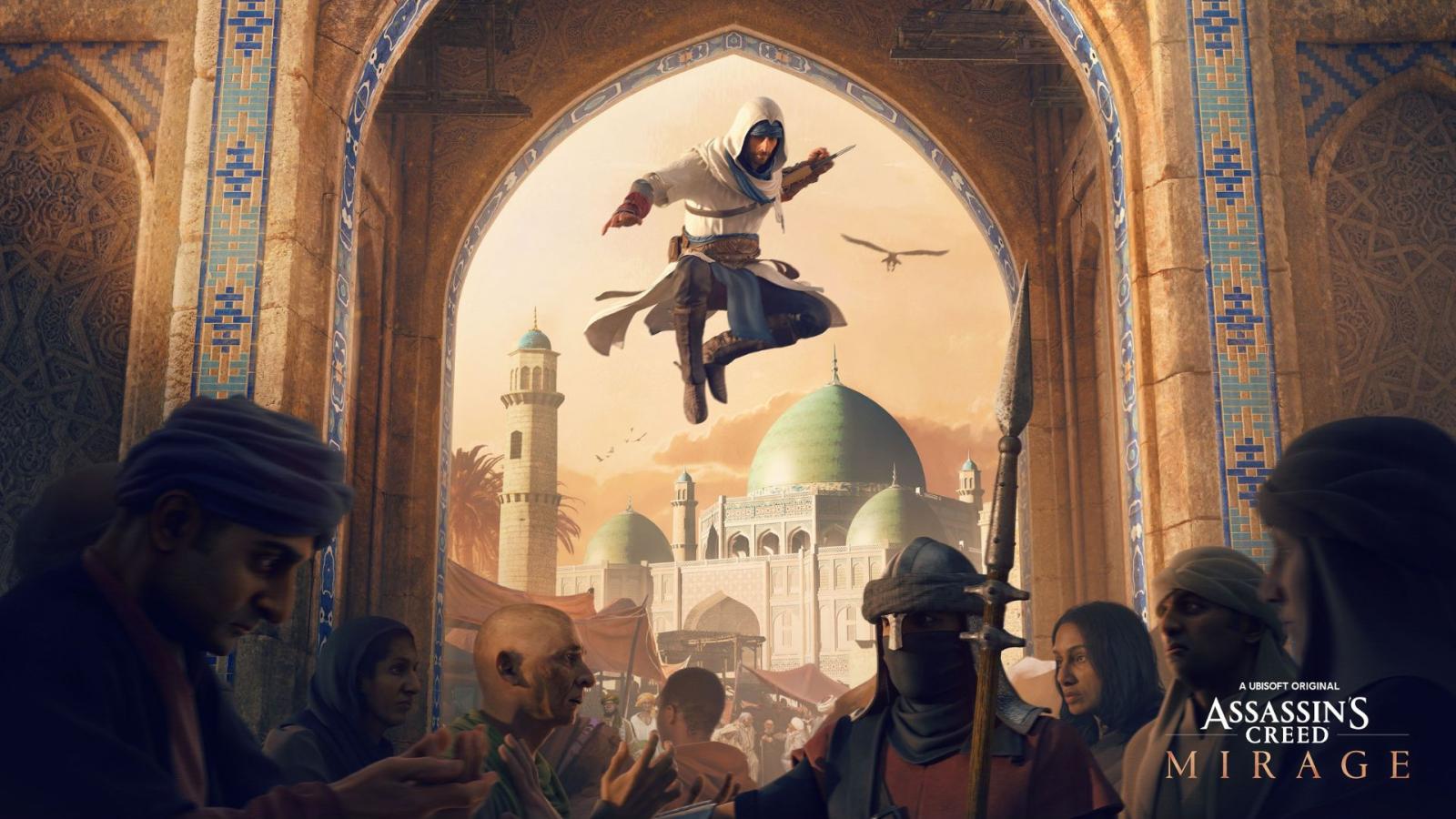
Edinburgh art historian helps build new Assassin’s Creed video game | Edinburgh College of Art
Assassin’s Creed: Mirage showcased five Khalili Collection artworks:
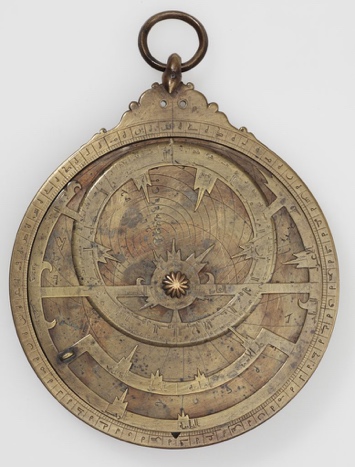
Planispheric Astrolabe
9th century AD • North Africa
Brass, cast, with fretwork rete and surface engraving
18.5 × 13.2 cm • Accession Number: SCI 430
The Planispheric Astrolabe from the Khalili Collection of Hajj and the Arts of Pilgrimage is a remarkable instrument used by astronomers and navigators, this intricately crafted astrolabe facilitated celestial navigation, allowing users to chart the stars and determine time and location with precision.
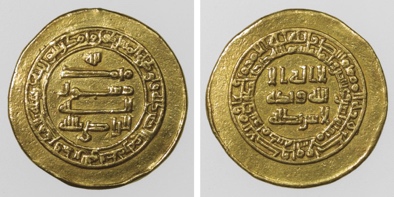
Gold Double Dinar
Dated 322 AH (934 AD) • Madinat al-Salam (Iraq)
8.32g; 22mm • Accession Number: AV 943
The Gold Double Dinar from the Khalili Collection of Islamic Art is a testament to the opulence and sophistication of medieval Islamic metallurgy. Adorned with intricate calligraphy and exquisite detail, this coin reflects the wealth and cultural refinement of the Islamic empires.
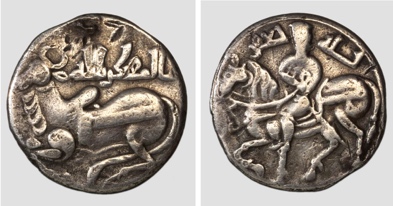
Silver Presentation Dirham
No date; (295–320 AH / 908–932 AD) • Without mint name (presumably Baghdad)
3.75g; 20mm • Accession Number: AR 1474
The Silver Presentation Dirham from the Khalili Collection of Islamic Art depicts a horseman in full regalia, offering insight into the military and economic power of the Islamic empires. This silver coin, crafted with meticulous detail, provides a glimpse into the vibrant world of ancient trade and commerce.
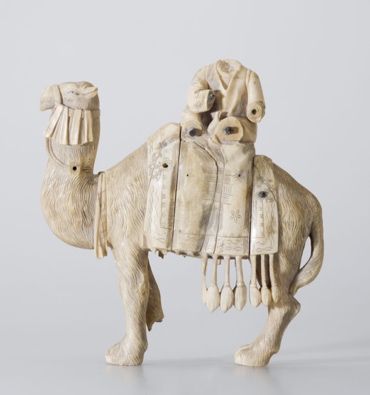
Statuette of a Camel and Rider
8th–9th century • Middle East
Ivory, carved, with some traces of black pigment
25 × 23.5 × 12 cm • Accession Number: MXD 356
The Statuette of a Camel and Rider from the Khalili Collection of Hajj and the Arts of Pilgrimage captures the nomadic lifestyle of the Bedouin tribes. Crafted with remarkable skill, this sculpture symbolizes the resilience and resourcefulness of desert communities, highlighting the central role of the camel in Arabian culture.
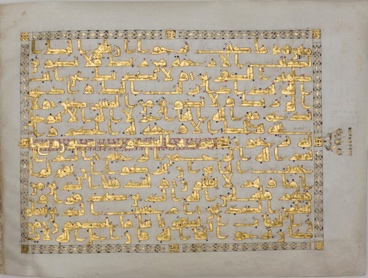
Five Folios from a Qur’an
9th century AD • Middle East or North Africa
Gold, black ink and opaque watercolour on vellum
27.5 × 36.8 cm • Accession Number: KFQ 52
The Five Folios from a Qur’an from the Khalili Collection of Islamic Art showcase the beauty of Islamic calligraphy and decorative arts. Each folio is adorned with intricate script and decorative motifs, reflecting the artistic mastery of medieval Muslim scribes and illuminators.
In an interview with Dr. Glaire Anderson, a Senior Lecturer in Islamic Art and Founding Director, Digital Lab for Islamic Visual Culture & Collections, she helps us to understand her role in diversifying gaming and digital cultural heritage and consequently the role we may play, as a Collection in helping to serve as windows into the rich cultural heritage of the Islamic world via new technologies to create immersive experiences.
Qaisra: Could you tell us a little more about the Digital Lab for Islamic Visual Culture & Collections?
Glaire: The Digital Lab for Islamic Visual Culture & Collections (DLIVCC) is an Edinburgh-based startup providing expertise on the art, architecture and cultural heritage of Islamic civilisation to the games, XR, education and cultural heritage sectors. We are best known for our historical consulting on Assassin’s Creed Mirage (Ubisoft, 2023), including the in-game Codex, History of Baghdad, now freely available via Ubisoft’s Discovery Tour Medieval Baghdad apps (2025, ages 12+).
Qaisra: Now just to dig a little deeper, how do you translate academic research in Islamic art into forms that work effectively for game developers and interactive media teams?
Glaire: I love that you’ve used the word ‘translate’ because that’s exactly how I see this public-facing work, as a necessary act of translation. I’ve been teaching the art and architectural and social history of the medieval Islamic lands to students in the US and in the UK for 20+ years – so the kind of familiarity with the material and with the field is the first and most important factor in translating academic research effectively for game developers and interactive media teams. Because industry collaborators are often coming from highly technical backgrounds, and not from Humanities backgrounds that we ourselves are steeped in, having a baseline level of experience with game development and immersive technologies tools is also key. While I don’t consider myself a technical person, having worked with Computer Scientists, game development, and fine arts students, and more than a decade ago (on the original Digital Munya Project) gave me key background and experience for this kind of translation.
Qaisra: What did Assassin’s Creed Mirage demonstrate about the role historically accurate cultural heritage can play in mainstream games?
Glaire: Ubisoft’s world design teams faced an extreme challenge in visualising the game’s built environment, due to the lack of remains from 9th century Baghdad. So the game’s virtual environment offers a successful example of how video games can use digital visualisation to make Islamic art, architecture, and cultural heritage widely accessible. Assassin’s Creed Mirage is a great example of video games as a powerful medium to help wide public audiences understand and appreciate architecture art, perhaps especially when buildings and other cultural heritage sites no longer exist, or when they can’t be visited, viewed, and experienced in real life.
Qaisra: What are the biggest challenges, or indeed responsibilities, when representing Islamic civilisation for global audiences in entertainment media? These may be similar to the challenges faced by all Islamic Art curators, however the target audience is different surely?
Glaire: For me, striking a balance between accuracy and authenticity regarding the period’s visual and material evidence is a huge challenge. I felt that responsibility keenly, as well as the responsibility of avoiding perpetuating outdated and problematic stereotypes about Muslims and Islamic civilisation. This is a video game that is bringing an unfamiliar artistic tradition and global history to millions of players and I’m hopeful that it will bring many more people to be interested in learning more about Islamic art and architecture around the globe. I think this is very exciting and commendable, because I would like to see wide public audiences fall in love with Islamic art and history the way they have with better known traditions, like ancient Greek, ancient Egyptian, or European art and history.
Qaisra: How do you see emerging technologies changing how Islamic visual culture and history can be taught and experienced?
Glaire: In my own research as a historian of architecture, landscapes and objects, video game engines have been transformative as a tool for visualisation and embodied experience of spaces, objects, landscapes. When I began working with these technologies, especially with game engines around 2010, it completely changed my own research process and insights about the medieval art and history I was trying to understand. Subsequently having the 3D visualisations from the immersive experiences I’ve developed over the years, and now through Assassin’s Creed Mirage, is allowing me to scale those experiences and insights, bringing them to many more students, but more importantly maybe, with audiences outside my university classrooms too.
Qaisra: Assassin’s Creed Mirage incorporated five objects from the Khalili collection into the Codex. How did you select these objects, and what does their translation into a game environment reveal about the possibilities of learning more about such objects?
Glaire: My work with Ubisoft began with a series of weekly workshops in which my team and I would present to their in-house history team, led by Ubisoft’s world-design director Maxime Durand. I approached these workshops like intensive graduate seminars. As part of that, I was showing them architecture, art and aspects of urbanism that are specific to the caliphate period and to the Abbasids, and it’s out of those workshops that Durand and Raphael Weyland came up with the themes for the 66 Codex entries, which became the categories: Economy; Belief & Daily Life; Government; Art & Science; and Court Life. Once these themes were determined, my team and I were able to brainstorm the works of art we thought could best complement the written text. We provided two or three possible choices for each entry and the final selection was made by Weyland. We wanted to represent as diverse a selection from the caliphal period as possible.
Qaisra: What did it mean to see specific historical objects from an academic collection reach a global audience through Assassin’s Creed, and how has that experience shaped how you think about access, interpretation and public engagement with Islamic cultural heritage?
Glaire: It’s been tremendously exciting! I’ve used Assassin’s Creed Mirage and the Discovery Tour Medieval Baghdad in teaching postgraduate students at University of Edinburgh, and students from such a diverse array of disciplinary backgrounds and experiences, and from around the world, have responded so positively. My experience with Assassin’s Creed has confirmed for me how important it is that we reach out of the academy and engage with the people who are making games, television, film – that represent the past, because this informs how the public perceive and understand our shared histories. If we want an informed public and if we want to see a high quality of entertainment we have to do our part to support public engagement, although I admit it’s not easy! But it is worth doing, and it feels more important to me now than ever.
Thank you so much to Glaire for taking the time to answer our questions and for sharing her expertise so generously. Her insights have been invaluable in helping us at the Khalili Collection engage with this innovative and rapidly evolving area and to better understand the possibilities of collaboration between collections, scholarship and the games industry!
Screenshots of How the Objects Are Seen in the Game
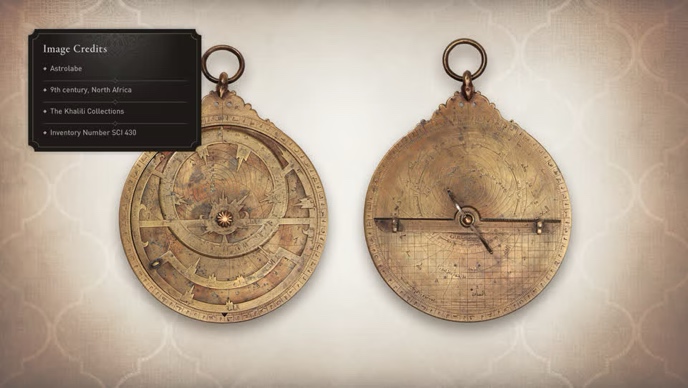
[UN][ACM] History of Baghdad feature article – Astronomical Instrument Museum Objets Credits
For more information see:
https://www.digitallabivcc.com
https://www.youtube.com/watch?v=20_iGzzzcio&t=97s
Curator
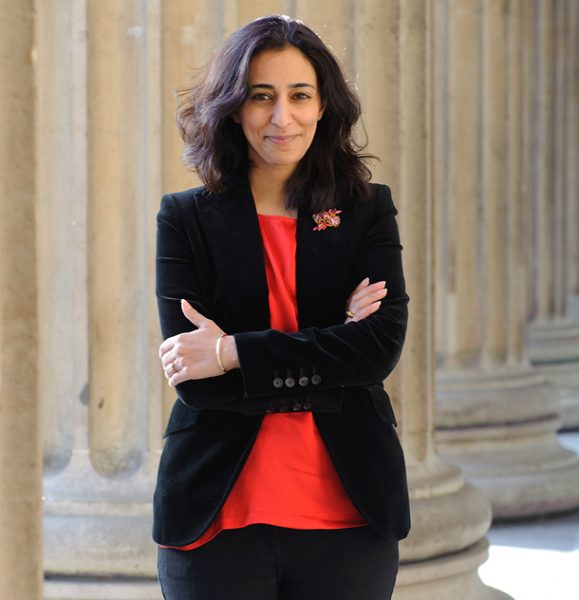
Qaisra M. Khan is curator of Islamic art at the Khalili Collections, where her focus is on the Arts of Pilgrimage, a subject on which she has lectured and broadcast widely. She has a degree in Law and an MPhil in Oriental Studies both from the University of Cambridge and after working for many years in financial consulting, she acquired an MA in Islamic Art from SOAS, University of London.
She has worked for the Museum of Islamic Art in Qatar and the British Museum, London, where she co-curated the pioneering ’Hajj: Journey to the Heart of Islam’ exhibition. Her publications include Hajj and the Arts of Pilgrimage (2022) and Essays in Honour of Nasser David Khalili (2023).
Her interest in William Morris came about in 2017 when invited to the Cheltenham Literature Festival to explore the idea of William Morris and Islamic art. She is co-curator of the exhibition ’William Morris and Art from the Islamic World’ at the William Morris Gallery (2024).

Curator
Dror Elkvity is Curator of the Khalili Collection of Spanish Damascene Metalwork, as well as five other collections under the Khalili auspices: the Japanese Art collection, the Kimono collection, Enamels of the World, Aramaic Documents, and Swedish Textiles. His work encompasses all aspects of the collections, from research and conservation to publications and exhibitions. He has overseen numerous exhibitions and publications drawn from the collections, including Metal Magic: Spanish Treasures from the Khalili Collection, Auberge de Provence, Valletta, Malta (2012); Beyond Imagination: Treasures of Imperial Japan from the Khalili Collection, 19th to Early 20th Century, Moscow Kremlin Museums, Russia (2017); Splendours of Imperial Japan, Musée national des arts asiatiques – Guimet, Paris, France (2019); and Kimono: Kyoto to Catwalk, Victoria and Albert Museum, London (2020–2025). Publications he has worked on include the exhibition catalogues Kimono: The Art and Evolution of Japanese Fashion, ed. Anna Jackson (Thames & Hudson, 2015), and Kimono: Images of Culture, 1915–1950 in the Khalili Collections, ed. Jacqueline M. Atkins (Prestel, 2024). Forthcoming publications include Visions in Silk: The Khalili Collection of Japanese Fine Art Textiles, ed. Clare Pollard, and Japonisme: Artistry and Influence, ed. Dror Elkvity (working title).

Contributor
I’m Dr. Glaire Anderson, award-winning author and historian of Islamic art, architecture, and visual culture.
I’m Founding Director and Principal Consultant of the Digital Lab for Islamic Visual Culture & Collections (DLIVCC), a purpose-led business serving the games and GLAM (Galleries, Libraries, Archives, Museums) sectors. I’m also Senior Lecturer in Islamic Art and Deputy Director of the History & Games Lab at the University of Edinburgh in Scotland, where I’ve taught since 2018.
I mentor and advise a small number of private clients, with a focus on leadership and consulting across video games, XR+, education, and cultural heritage for positive social impact.